


Concrete testing equipment should follow the sample from delivery through fresh-property checks, specimen preparation, curing, strength testing and investigation of the finished structure. A workflow checklist prevents a laboratory buying a headline machine while overlooking mould capacity, curing control or traceable measurement.
Fresh Concrete
A basic site set includes sampling containers, scoop, thermometer, balance where required and cleaning tools. A slump cone, tamping rod and base plate provide the routine consistency check described in our concrete slump test guide. Select an air meter for air-entrained concrete and the project method, plus density and yield apparatus where mix control requires them.
Equipment must be portable without becoming fragile. Smooth, corrosion-resistant surfaces simplify cleaning between batches. Provide water, a level test area and protected forms. Record sampling and test times because fresh concrete changes rapidly; an expensive instrument cannot correct a delayed or unrepresentative sample.
Specimen Preparation and Curing
Plan enough cube or cylinder moulds for peak weekly volume, retests and the full curing cycle. Add a compacting rod or vibrating table, strike-off tools, durable identification and mould dimensional checks. A thermostatically controlled curing tank needs circulation, racks, temperature monitoring and sufficient clearance around specimens.
Separate dirty casting work from measurement and curing areas. Moulds must remain level and protected for initial curing, then specimens must be demoulded without edge damage. Include end-grinding or capping equipment when cylinder methods require plane bearing faces. Backup temperature monitoring is inexpensive insurance against losing an entire batch.
Strength Testing
The central machine is normally a Class 1 concrete compression system with suitable cube and cylinder platens. Match capacity to maximum specimen load, not only nominal strength. Automatic pacing improves repeatability. See the compression test method and our flexural strength guide for beam-frame requirements.
Also budget for callipers, balances, handling aids, guards, fragment cleaning and reporting software. Verify force at least annually under EN 12390-4 and after relocation or repair. Intermediate checks help reveal drift between formal calibrations.
Convert the laboratory’s weekly concrete volume into simultaneous mould, tank and machine demand before issuing a purchase schedule. The compression frame must cover the calculated load from the strongest 150 mm cube while retaining a verified lower range for cylinders. State EN 12390-4 Class 1, automatic stress pacing, platen sizes and fragment-door interlocks explicitly. Size curing tanks for specimen clearance as well as nominal litres, with circulation and an independent 20 ± 2°C recorder. For field instruments, include rebound-anvil checks, UPV reference bars and spare transducer leads. Arrange calibration routes for force, temperature, mass, length and pressure so one unavailable service does not stop the entire concrete workflow.
NDT and Structural Investigation
For hardened structures, the rebound hammer screens surface hardness and UPV testing assesses pulse transmission and uniformity. Neither provides a universal strength conversion. A covermeter locates reinforcement before drilling, and a rig-mounted core drill obtains specimens for direct assessment.
Choose NDT equipment with data export, durable transducers, reference-check provisions and site protection. Establish survey grids and identification before work starts. Correlate results with cores only through a project-specific engineering assessment.
Checklist by Laboratory Size
A basic site laboratory needs a slump set, at least six cube moulds, compaction tools, protected initial curing and a curing tank, plus reliable access to a compression machine. A commercial laboratory adds higher-throughput mould handling, automatic compression, flexural testing, air and density apparatus, environmental logging and structured data management.
An accredited laboratory also needs documented methods, trained authorised staff, uncertainty where applicable, traceable calibration, equipment status labels, intermediate checks and controlled records. NL Scientific’s SAMM 835 ISO/IEC 17025 accredited calibration laboratory can support the calibration plan, but the user remains responsible for daily condition checks and method compliance.
Specification Checklist Before You Buy
- Convert peak daily sampling into quantities of slump sets, moulds and curing capacity, allowing for 7- and 28-day occupancy.
- Specify EN 12390-compatible mould dimensions, a suitable vibrating table and tank control at 20 ± 2°C with independent logging.
- Size the compression machine from specimen area and maximum strength, requiring Class 1 verification and automatic pace control.
- List flexural span, beam sizes, air-meter method, balance ranges and every NDT transducer needed by the test schedule.
- Check site voltage, water supply, drainage, lifting routes, fragment guarding and separation of wet and precision work.
- Include calibration for force, mass, temperature, length and pressure channels, with named local service arrangements.
Ask vendors to itemise consumables such as mould seals, tamping rods, tank heaters, platen accessories and coupling gel. Commercial laboratories should require user permissions, audit trails and exportable raw readings. For a mobile site facility, prioritise rugged cases, replacement batteries and stable work surfaces. Commission the entire sample workflow with a trial batch so capacity bottlenecks emerge before contractual testing begins.
Frequently Asked Questions
What equipment is needed for a basic concrete site lab?
A basic site lab needs a slump set, at least six cube moulds, a curing tank and reliable access to a compression testing machine.
How often must concrete testing equipment be calibrated?
Compression machines should be calibrated at least annually under EN 12390-4 and again after relocation or repair.
Recommended Apparatus
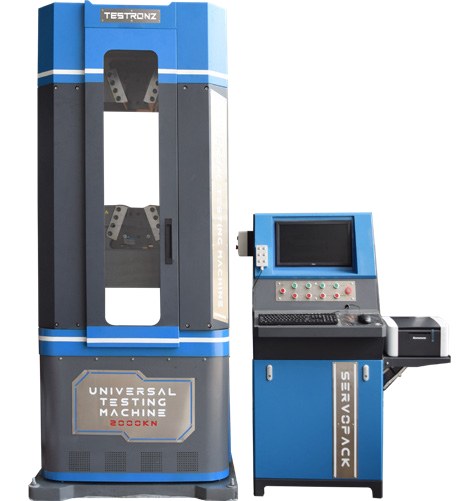
NL Scientific manufactures the ELECTRO-HYDRAULIC Servo Control Universal Testing Machine 2000kN (6KS) for this work. Browse the full Concrete Testing Equipment range or request a quotation from our engineers.
