


Soil testing equipment must support the chain from sample description and classification to compaction, bearing, shear strength and consolidation. The correct list depends on whether the laboratory controls earthworks, supplies design parameters, or does both.
Classification Workflow
Start with balances, ovens, moisture tins, sample splitters and preparation tools. A mechanical shaker and verified sieves cover coarse fractions; a hydrometer setup extends grading into fine material. Liquid-limit, plastic-limit and shrinkage tools support the Atterberg limits method.
Provide dust control and separate wet preparation from balances. Choose capacity and resolution for each mass range, rather than relying on one balance. Classification establishes how the soil is likely to respond and routes specimens to the appropriate engineering tests.
Compaction and Bearing
For moisture-density relationships, specify moulds, manual or automatic rammers and an extruder for the Proctor compaction test. CBR work adds loading frame, plunger, moulds, surcharge weights and soaking tank; see the CBR method guide.
Site density requires excavation tools, calibrated sand and cones for the sand replacement test, or another specified method. Link every field result to the correct laboratory MDD and moisture condition.
Shear Strength
A direct shear box, normal loading system and controlled drive provide drained strength on a defined plane; our direct shear guide describes its use. A vane apparatus is valuable for soft saturated clay. For controlled confinement and drainage, a triaxial system adds pressure controllers, pore-pressure and volume-change measurement.
Use our UU, CU and CD triaxial guide to define the configuration. Buying a cell without de-aired-water preparation, suitable transducers or specimen tools leaves the workflow incomplete.
Consolidation and General Laboratory
An oedometer applies staged vertical stress and measures deformation with time, requiring load frames, cells, weights or pressure control and displacement measurement. Stable temperature and vibration control improve long-duration readings. Permeability equipment may also be required by the ground model.
Across all benches, include calibration weights, reference gauges, storage, water supply, computers and controlled worksheets. Plan sample receipt, quarantine, preparation, testing and retained-sample storage so identities cannot cross. Separate high-force equipment and wet work from precision balances.
For an oedometer bank, specify ring diameters, maximum vertical stress, load increments and displacement resolution together; mismatched cells and weights make planned stress stages impossible. Reserve a vibration-free bench for readings that may continue for days, and provide temperature monitoring near the specimens. Triaxial pressure systems require de-aired water, compatible tubing, spare membranes and transducers sized for the intended effective stresses. Keep Proctor and CBR impact work away from balances and consolidation frames. Confirm oven capacity against moisture-sample throughput, then provide verified thermometers and calibration weights covering each balance range. Soil-equipment commissioning should use representative clay and granular materials rather than an unloaded electrical demonstration.
Site Lab or Design Lab?
A roadworks site laboratory normally prioritises moisture, classification, Proctor, field density and CBR, with rugged equipment and fast turnaround. A design laboratory needs higher-control direct shear, triaxial and consolidation systems, undisturbed-sample tools and longer-term environmental stability.
Road earthworks commonly require classification, Proctor, field density and CBR at minimum, but the contract determines frequency and methods. Create a test-and-equipment matrix including throughput, specimen size, standard, range, calibration and utilities. This turns a broad catalogue into a defensible procurement specification.
At a road site, link every field-density location to the correct Proctor curve, compactive effort and material source; using a convenient MDD from another layer invalidates the percentage compaction. Protect CBR specimens and surcharge sets through soaking, and verify the frame’s 1.27 mm/min penetration before production testing. A design facility should preserve tube-sample orientation and disturbance records from receipt through triaxial or oedometer preparation. Establish separate registers for sieves, rammers, mould volumes, proving devices and pressure channels because their verification intervals differ. Review raw moisture, mass, load and displacement observations before releasing derived parameters, especially when a result crosses a stratigraphic boundary or design assumption.
Specification Checklist Before You Buy
- Map each contracted method to sample mass, particle size, specimen dimensions, daily throughput and required reporting turnaround.
- Choose balance capacities and resolutions separately for moisture, sieving and large mould work, with traceable calibration weights.
- Define Proctor rammer energy, mould standards, CBR frame capacity, penetration rate and soaking-tank volume.
- For shear systems, state box or specimen sizes, normal and axial loads, pressure ranges, pore-pressure resolution and volume-change capacity.
- Confirm oven temperature range, local power, de-aired-water provision, drainage, compressed air and vibration-free space for oedometers.
- Order consumables including membranes, porous stones, filter paper, seals, moisture tins, sieves and hydrometer cylinders.
Require software to retain raw load, displacement, pressure and time channels in an accessible format. Ask how each transducer is removed for calibration without disabling an entire bank of tests. Site laboratories need transport restraints and dust protection; design laboratories need stable long-duration control. Review spare-part lead times for motors, load cells and pressure controllers before selecting equipment that supports critical project deadlines.
Frequently Asked Questions
What tests are required for road earthworks?
Classification, Proctor compaction, field density and CBR are normally required at minimum, subject to the project specification.
What is the difference between field and laboratory soil testing?
Field tests provide in-place properties quickly, while laboratory tests control drainage and stress paths to obtain design parameters.
Recommended Apparatus
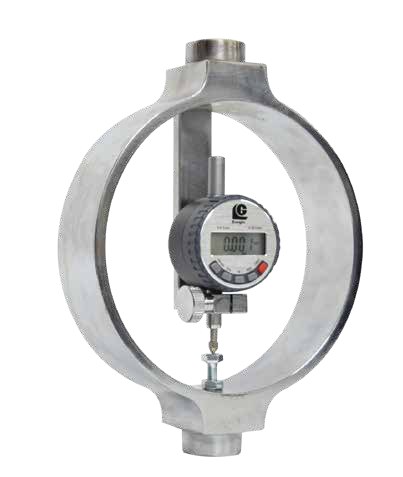
NL Scientific manufactures the Load Proving Ring (DIGITAL Readout) for this work. Browse the full Soil Testing Equipment range or request a quotation from our engineers.
