


The bend and rebend tests verify the ductility of reinforcing bar — that rebar can be site-bent around formers, and re-straightened after strain ageing, without cracking. They complement the tensile test in BS 4449 / MS 146 compliance.
What the Test Measures
In the bend test, a bar is bent around a specified mandrel to a set angle and inspected for cracks. The rebend test bends the bar, artificially ages it at 100 °C, then partially straightens it — probing embrittlement from strain ageing, the mechanism behind site failures of re-straightened bars.
Apparatus Required
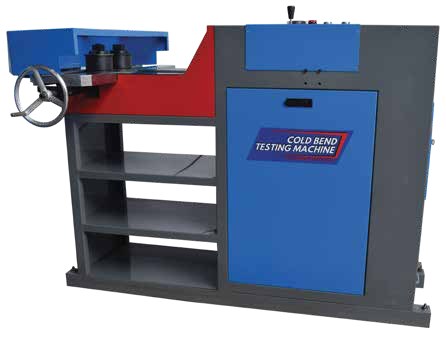
- Bend/rebend testing machine or press with interchangeable mandrels (former diameters typically 4d–8d by bar size)
- Supports and rollers to suit bar diameters (commonly 8–40 mm)
- Ageing bath or oven at 100 °C for the rebend procedure
- Magnifier for surface inspection
Test Procedure
- Bend: bend the specimen around the specified mandrel (e.g. 180° over 4d for ≤16 mm B500B bar) at ambient temperature in one continuous operation.
- Inspect the tension surface — no visible transverse cracking permitted to the unaided (or specified) eye.
- Rebend: bend 45° over the specified former, age 30 min in boiling water (100 °C), cool, then bend back at least 23°.
- Inspect again for cracking or fracture.
Calculation & Reporting
Pass/fail per bar with bar designation, mandrel diameter, angles and ageing conditions. Test frequency follows the product standard’s batch/cast sampling plan.
Acceptance Criteria
No fracture and no cracks visible on the outer bent surface. A single rebend failure typically triggers retesting at increased frequency on the cast; systematic failures reject the batch — common causes are high nitrogen steel or excessive cold working at the mill.
Frequently Asked Questions
Why include the ageing step in the rebend test?
Strain ageing embrittlement develops over weeks at site temperature. Thirty minutes at 100 °C accelerates the same nitrogen-migration mechanism, exposing bars that would crack when re-straightened on site.
What mandrel diameter should be used?
It scales with bar size and grade — BS 4449 B500B uses 4d up to 16 mm and 7d above; always take the former size from the product standard, not a generic table.
Recommended Apparatus
NL Scientific manufactures the Cold Bend Testing Machine (6-50mm Dia.) for this method. Browse the full Steel Testing Equipment range or request a quotation from our engineers.
