


The plate load test measures the load-settlement response of soil in situ beneath a rigid steel plate. It supports assessment of allowable bearing pressure and modulus of subgrade reaction where the tested depth and plate scale are representative of the proposed works.
What the Test Measures
A plate 300–750 mm in diameter or width spreads a known load into the ground while independent gauges measure vertical movement. The resulting load-settlement curve shows initial stiffness, progressive yielding and, where reached, an ultimate bearing response. The modulus of subgrade reaction, k, is pressure divided by settlement at a stated point; k30 denotes a result based on a 300 mm plate.
The influence zone is shallow relative to a full foundation. Results therefore describe the prepared test level rather than every deeper stratum. Plate size, footing width, soil type and groundwater conditions must be considered before applying the value to design.
Apparatus Required
- Rigid circular or square bearing plates, normally 300–750 mm, with sufficient thickness and stacking pieces.
- Hydraulic jack with calibrated load cell or proving ring.
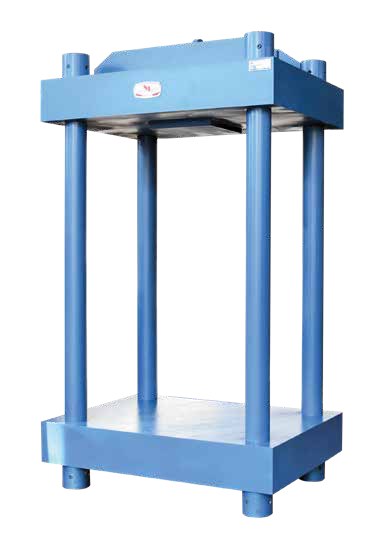
- Reaction frame, loaded vehicle or kentledge with adequate capacity and stability.
- Three or four dial gauges or LVDTs supported on datum bars outside the reaction influence.
- Level, timer, seating materials and weather protection.
Before mobilising, calculate the reaction needed for the chosen plate area and maximum pressure, then verify the frame or kentledge with a safe reserve. Match the jack stroke to expected settlement and packing height. Check the load cell throughout the intended force range and compare all displacement gauges on a common movement before installation. At the test level, identify the soil, surface moisture and groundwater, photograph the prepared seat and record plate diameter. During loading, preserve every individual gauge reading and time stamp. A plate-load report cannot be reconstructed reliably from a final k-value if tilt, reaction movement or delayed settlement was not captured in the field notes.
Test Procedure
- Excavate to test level with minimal disturbance and prepare a flat contact surface. Use only a thin levelling layer where necessary.
- Centre and seat the plate, jack and force measurement system beneath the reaction. Establish datum beams independently.
- Apply a small seating load, release if required by the method, zero all readings and check that the reaction remains stable.
- Load in approximately one-fifth-design-load increments. At every stage record load, time and each settlement gauge.
- Hold an increment until settlement rate is less than 0.02 mm/min, or for the specified observation period, before continuing.
- Continue to the required maximum or clear curve break, without exceeding safe reaction capacity. Unload in stages and record rebound.
Calculation & Reporting
Plot applied pressure against mean plate settlement. Calculate pressure from force divided by loaded area. Obtain k by dividing a selected pressure by the corresponding settlement and state the plate size and interpretation point; do not report an unqualified k value. Ultimate bearing capacity may be interpreted at a distinct curve break, while allowable pressure additionally depends on settlement criteria and the engineer’s safety approach.
Report location, level, plate dimensions, soil description, moisture, reaction arrangement, loading schedule, gauge readings and groundwater observations. Compare the result with nearby compaction evidence from the sand replacement field density test.
Corrections and Use
A 300 mm plate is conventional for k30 on granular subgrade. Larger plates reduce scale effects, particularly in cohesive or layered soils, but require much greater reaction. Converting a plate response to foundation width is not a universal multiplier; use the applicable design method and ground model. A high water table can reduce effective stress or soften moisture-sensitive material, so record its position and assess seasonal conditions.
Plate loading measures stiffness and bearing response directly at one location. It does not replace classification or broader investigation. For pavement work, relate it to the CBR test only through locally accepted correlations, not an assumed universal equation.
Common Errors & How to Avoid Them
- Placing the plate on a ridged or disturbed surface concentrates contact stress and exaggerates settlement; trim the level carefully and use only the permitted thin seating layer.
- Supporting datum bars inside the reaction influence makes the gauges move with the ground, understating true movement; establish remote, independently supported references.
- Using an unstable vehicle or undersized kentledge allows reaction uplift and produces a false curve break; calculate reaction capacity and monitor it throughout loading.
- Advancing before settlement stabilises misses time-dependent movement; hold each increment until the stated rate or observation criterion is satisfied.
- Averaging gauges without checking their spread can conceal plate tilt; inspect individual readings and stop if eccentric loading develops.
- Reporting k without plate diameter or selected settlement makes the value unusable; state both alongside the complete curve.
Also protect gauges from direct sun, vibration and accidental contact. Record groundwater, excavation delay and rainfall because changing moisture can alter the tested surface before the first increment is applied.
Frequently Asked Questions
How long does a plate load test take?
A plate load test typically takes half to a full day per location, including the reaction setup and the time needed for settlement readings to stabilise.
What plate size should be used?
A 300 mm plate is commonly used for k30 subgrade modulus on granular soils; larger plates reduce size effects on cohesive soils.
Recommended Apparatus
NL Scientific manufactures the 4 Column Rigid Reaction Frame 1000 Tons for this method. Browse the full Soil Testing Equipment range or request a quotation from our engineers.
