


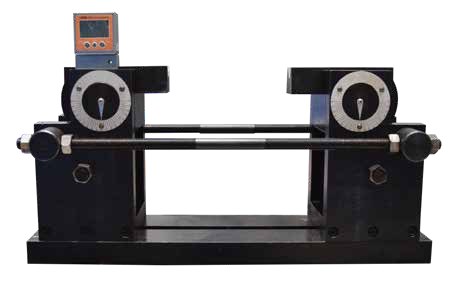
The ductility test measures how far a bitumen briquette stretches before breaking — an index of the binder’s cohesion and its ability to deform without cracking under traffic and thermal movement.
What the Test Measures
A moulded briquette with a 10×10 mm waist cross-section is pulled apart in a temperature-controlled water bath at 25 °C and 5 cm/min. The elongation at the moment the thread breaks, in centimetres, is the ductility.
Apparatus Required
- Ductilometer (ductility testing machine) with motorised carriage, 5 cm/min ± 5% speed and measuring scale (most machines test three briquettes simultaneously)
- Brass briquette moulds with side pieces and base plate
- Water bath with temperature control 25 ± 0.1 °C and salt/glycerol density adjustment to keep the thread suspended
- Release agent, straightedge and trimming knife
Test Procedure
- Pour molten, sieved bitumen into assembled moulds; cool at room temperature 30–40 min, then in the 25 °C bath 30 min; trim flush.
- Condition the assembled briquettes in the bath 85–95 min at 25 °C.
- Remove side pieces, hook moulds to the fixed and moving pins, and pull at 5 cm/min.
- Record elongation at rupture for each briquette; the thread must stay submerged 25–50 mm deep — adjust bath density if it floats or sinks.
Calculation & Reporting
Report the mean of three briquettes to the nearest centimetre with test temperature and speed. If results scatter beyond the standard’s repeatability, repeat the set.
Acceptance Criteria
Paving specifications typically require minimum 75–100 cm at 25 °C for 60/70 and 80/100 grades; many specs simply state “100+”. Oxidised or blown bitumens give much lower values by design.
Frequently Asked Questions
What does low ductility indicate?
Age-hardened, overheated or wax-rich binder with poor cohesion — pavements built with it are prone to fatigue and low-temperature cracking. Cross-check with penetration and softening point before rejecting a batch.
Why must the briquette thread stay mid-depth in the bath?
Floating or sinking threads experience buoyancy forces that add or subtract tension, distorting the elongation. Adjust water density with salt (to raise) or alcohol/glycerol mixtures per the standard.
Recommended Apparatus
NL Scientific manufactures the Advance Digital Ductilometer Apparatus (TENSILE Load Series) for this method. Browse the full Bitumen & Asphalt Testing Equipment range or request a quotation from our engineers.
