


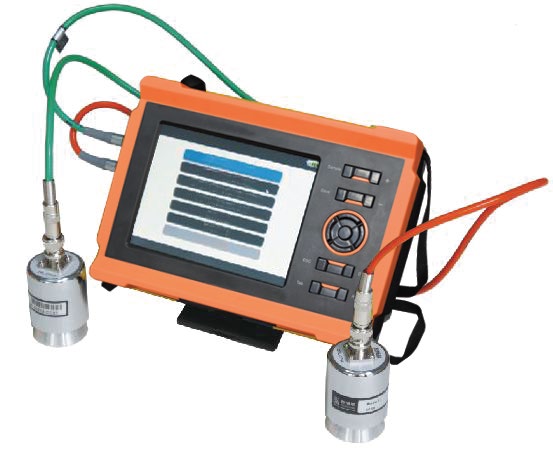
The ultrasonic pulse velocity (UPV) test transmits a compression wave through concrete and measures its transit time, giving a non-destructive assessment of uniformity, cracking and voids in structures.
What the Test Measures
Pulse velocity depends on the elastic modulus and density of concrete. High velocity indicates dense, continuous material; low velocity flags honeycombing, cracks, or poor compaction. Velocity can also monitor strength development when correlated to the specific mix.
Apparatus Required
- UPV instrument with pulse generator, timing display (0.1 µs resolution) and a pair of 54 kHz transducers
- Couplant (grease or petroleum jelly) for acoustic contact
- Calibration reference bar of known transit time
- Measuring tape for exact path length
Test Procedure
- Zero the instrument on the reference bar.
- Mark transducer positions; measure path length to ±1%.
- Apply couplant and press transducers firmly; use direct (opposite faces) transmission wherever possible — semi-direct and indirect arrangements only where access is limited.
- Record the steady transit time reading; repeat on a grid to map the element.
Calculation & Reporting
Velocity V = L / T (km/s), where L is path length and T transit time. Report arrangement, path length, and any surface conditions. For indirect readings, apply the standard’s correction as surface measurements read 5–20% lower.
Acceptance Criteria
Common quality bands for natural-aggregate structural concrete: above 4.5 km/s excellent; 3.5–4.5 km/s good; 3.0–3.5 km/s doubtful; below 3.0 km/s poor. Bands are indicative — compare against sound areas of the same structure and mix.
Frequently Asked Questions
Can UPV give compressive strength directly?
No. Velocity-strength correlations are mix-specific and moisture-dependent. Combine UPV with rebound hammer (SonReb method) or cores when strength values are required.
Does reinforcement affect readings?
Yes — steel transmits pulses about 1.7 times faster than concrete. Route pulse paths away from bars parallel to the path, or apply the correction factors given in the standards.
Recommended Apparatus
NL Scientific manufactures the Ultrasonic Detector for this method. Browse the full Concrete Testing Equipment range or request a quotation from our engineers.
