


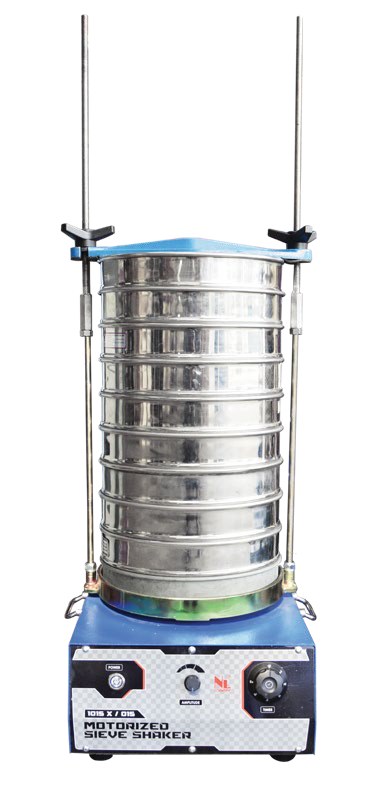
Sieve analysis determines the particle size distribution (grading) of fine and coarse aggregates — the most fundamental aggregate test, controlling mix proportions for concrete and asphalt and compliance with grading envelopes.
What the Test Measures
A dried, weighed sample is passed through a nested stack of standard sieves. The mass retained on each sieve converts to cumulative percentage passing, plotted as a grading curve against specification limits.
Apparatus Required
- Standard test sieves (e.g. 37.5, 20, 14, 10, 5 mm; 2.36 mm, 1.18 mm, 600, 300, 150, 75 µm) with lid and receiver
- Mechanical sieve shaker
- Balance readable to 0.1% of sample mass
- Drying oven at 105–110 °C and sample divider/riffle box
Test Procedure
- Reduce the sample by riffling to the standard minimum mass (e.g. 2 kg for 20 mm aggregate, 500 g for fine aggregate).
- Oven-dry to constant mass and cool.
- Assemble sieves in descending order; shake mechanically for 10–15 minutes.
- Weigh material retained on each sieve; verify total mass loss is under 0.3%.
Calculation & Reporting
Cumulative % retained = running sum of retained masses / total × 100; % passing = 100 − cumulative retained. Report the grading table, curve, and fineness modulus for fine aggregate (sum of cumulative % retained on standard sieves / 100).
Acceptance Criteria
Gradings must fall inside the specified envelope (e.g. BS 882 / ASTM C33 for concrete aggregates, road authority envelopes for base courses). Fineness modulus of concrete sand typically runs 2.3–3.1; a shift of more than 0.2 between deliveries signals a supply change worth investigating.
Frequently Asked Questions
Dry or washed sieve analysis?
Where fines cling to coarser particles (dusty crusher runs, clayey sands), first wash over the 75 µm sieve (ASTM C117) and dry, then sieve. Dry sieving alone understates the fines content.
How often should sieves be checked?
Inspect meshes for wear and distortion monthly and verify aperture compliance with master sieves or calibration annually — worn sieves systematically coarsen reported gradings.
Recommended Apparatus
NL Scientific manufactures the Motorized Sieves Shaker (E-VERSION) for this method. Browse the full Aggregate & Rock Testing Equipment range or request a quotation from our engineers.
